mierzicki.art

The paintings are presented in a dark frame with passe-partout, uncropped — so as to preserve the full relationship of format, margin, and compositional tension.
Clicking a card opens a high-resolution preview. The "in the living room" scale visualization opens via a separate button in the preview window.
Art is emphatic cognition, but not cognition of objects. Only someone who grasps a work of art as a complex truth comprehends it.
- Theodor W. Adorno
Thanks to friends, fellow wanderers, and supporters - those luminous encounters along the bewildering paths of art and life.
UnMarchand does not function as a catalog in the classical sense. It does not systematize the artist's work according to styles or periods, does not lead toward a culmination, does not offer aesthetic closure. It is rather a navigational tool within the field of tensions that Viki J. Mierzicki has consistently constructed over the years — between figuration and its disintegration, between language and its compromise, between history and its mechanical recurrence.
The starting point is a radically non-institutional stance, close to what Jean Dubuffet called barbarie nécessaire: a rejection of the smooth culture of art consumption in favor of raw contact with matter and meaning. Yet Mierzicki does not propose an alternative symbolic order — he reveals a world devoid of center, in which the subject functions as a remnant, a trace, a vector of force, or a site of something that has already vanished.
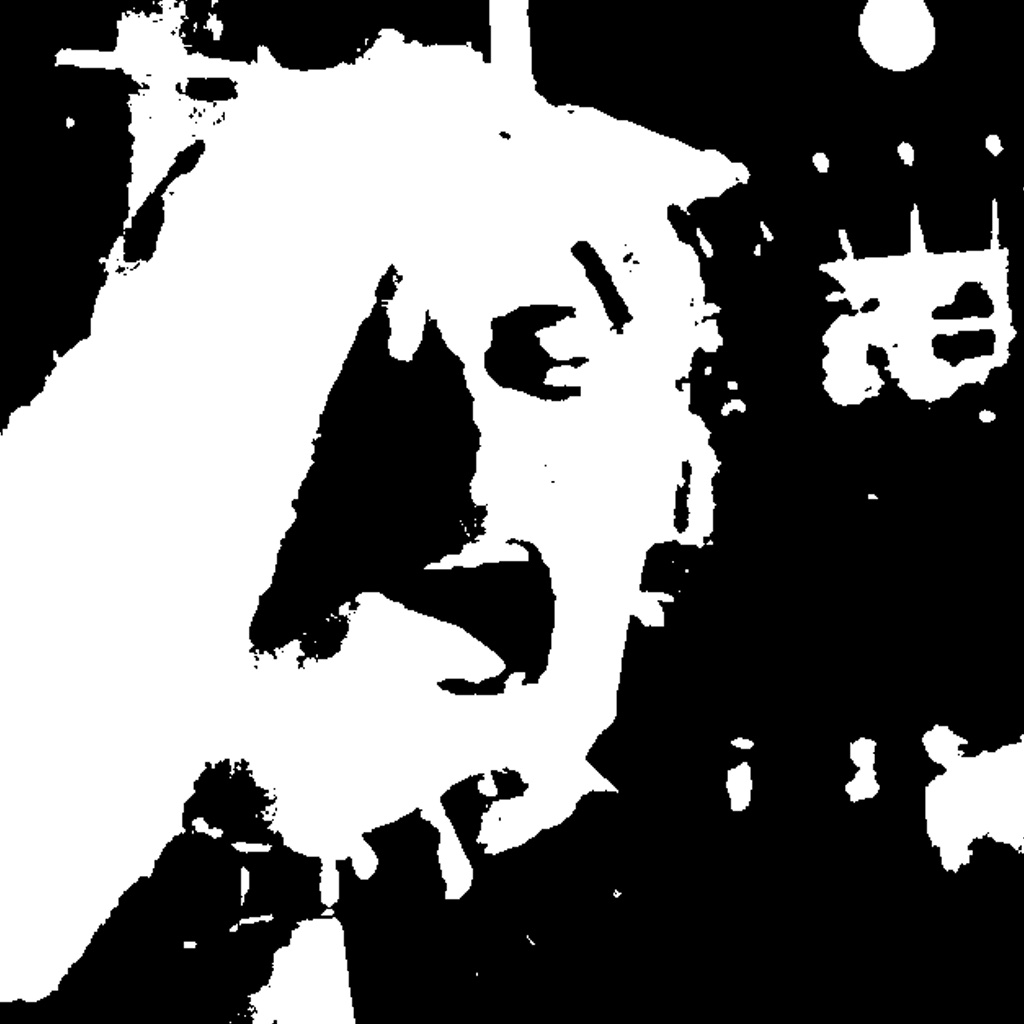
The human figure in these paintings is therefore not a hero, but a formal and existential problem at once. The body appears as a carrier of exhaustion, deficit, repetition — never as a whole, always in a state of entropy. The scream does not lead to catharsis; silence brings no solace. The political nature of this painterly practice does not lie in journalism or illustration — it is structural: inscribed in the very organization of the canvas, in the relation between gesture and its erasure, between figure and the background that engulfs it. War, migration, propaganda, childhood marked by violence — these are not themes, but conditions under which the painting comes into being and which determine its internal logic.
The UnMarchand catalog was conceived as a visual essay, not a chronological register. The sequence of works leads from manifestational gestures, through the existential figure, toward images of systems and ideologies, to ultimately arrive at structures devoid of articulation — wall, rhythm, series. There is no clear beginning or end here; there are pauses, densities, moments of silence. It is these that regulate the tempo of reading and delineate possible trajectories of reception.
Let me repeat for clarity. The paintings are presented in a dark frame with passe-partout, uncropped — so as to preserve the full relationship of format, margin, and compositional tension. Each card constitutes an autonomous whole: reproduction, title, basic data, and a lapidary curatorial comment. Clicking a card opens a high-resolution preview, enabling analysis of painterly matter, texture, and gestural structure.
The catalog does not impose a single path. It can be read linearly, but returning, skipping, pausing is equally valid. Meaning emerges not from the sum of works, but from the constellation of relations between them. UnMarchand does not strive to be accessible. It is not an invitation to consume images, but to confront them — and what has been deposited within them: remnants of experience that resist representation, yet nonetheless demand form.
by Anna Rozenfeld
The world in these works has lost its balance.
Not suddenly, not dramatically — but slowly, almost quietly, as if the ground gave way while no one was watching.
In World Turned Upside Down, on Migration, orientation fractures. Bodies tilt, hover, fall — not chaotically, but as if gravity itself had been suspended. People become vectors: points in motion, lines drawn by unseen forces, lives routed and predicted by systems that measure, sort, and control. Migration is not a story; it is an algorithm — abstracted, quantified, disciplined. The body is no longer free; it is mapped, delayed, redirected. Individual histories dissolve into flows, trajectories stripped of voice.
This instability expands in No Center and No Horizon. The horizon — the promise of arrival, of stability — never materializes. There is no center to return to, no point of rest. Space stretches, thins, empties. Figures drift in perpetual transit, not only across borders, but across states of belonging. Displacement is internalized. What appears abstract is intimately, painfully lived.
Movement itself becomes a condition of life under systems that enforce control, marginalize agency, and obscure human presence. Paint drifts. Edges erode. Orientation is denied, not as accident, but as structure.
In Korczak's Children, the instability shifts again, turning inward. The figures carry a different gravity: that of interrupted childhood, of care confronted by historical violence. The reference to Janusz Korczak is ethical rather than illustrative. These children are not shown as victims, but as fragile presences — suspended between protection and disappearance. Faces blur. Gestures hesitate. What remains is tenderness marked by knowledge: an awareness of what history allows to happen, again and again.
This work stands as the moral center of the catalogue. Not as accusation, not as spectacle, but as a quiet axis around which everything else turns. It functions as a monument — stripped of pathos, refusing elevation or heroic distance. Its weight lies precisely in restraint.
The same gravity appears in Korczak's Children (variant) under different tension. Where other works speak through movement, displacement, or erosion, Korczak's Children holds still. The burden is carried inward, condensed into pauses, into care that persists despite the certainty of loss. Memory does not shout; it remains, steady and unresolved.
What endures is not tragedy, but responsibility. A fragile, unrelieved presence that resists forgetting — and, in doing so, refuses closure.
Across all these works, Mierzicki refuses clarity, denies closure, and challenges the viewer to inhabit instability. Bodies, space, and time are charged with political tension: lives measured, routed, displaced, and endangered. Mierzicki's surfaces carry these tensions. Paint behaves like memory — layered, unstable, unwilling to settle. Erasure counters authority. Fragmentation resists closure. Incompleteness becomes a position.
Yet the works do not moralize; they linger, insist, and demand attention. To look is to be implicated, to recognize the structures that govern movement, belonging, and care. The images do not offer comfort. They remain open, suspended, insisting that instability, displacement, and ethical attention are the conditions of our present.
by Anna Rozenfeld
a figure
emerges
but never whole
not quite
gesture before form
entropy
forms dissolve
figures fragment
shapes
ask questions
but answer none
remember:
a body is a trace
a trace is a tension
a question in paint
respect the edge
where background
meets absence
look closely
the scream does not resolve
but resonates
in the void between strokes
where silence listens
and forms are at odds
be attentive
to the hesitant line
to the hesitant self
the figure compromised
entangled in history
in the mechanical recurrence
echoing beyond shape
not obedience
but refusal
a gaze that does not rest
a memory that does not yield
a resistance in paint
in absence
in every last scratch
and now
read upward —
from absence
echo
resistance
not yield
memory
a gaze
refusal
not obedience
entropy
shapes
figures fragment
forms dissolve
a figure
never whole
by Anna Rozenfeld
Layer upon layer
layer
upon
layer
the walls hum
hum
hum
muted ochres
ochres
shadows fold
fold
color bleeds
bleeds
beyond expectation
Be attentive —
attentive
lines guide
guide
yet do not bind
bind
the drips, the scratches
scratches
hidden layers speak
speak
louder than surface
Remember:
memory trembles
trembles
light fractures
fractures
forms insist
insist
geometry of dissent
Do not bow
bow
brush of conscience
conscience
smear, fold, bend
bend
your dissent
dissent
too vivid
vivid
to erase
World grids itself
grids itself
answer in gestures
gestures
shadows, splinters
splinters
silent spaces
spaces
between paint
paint
and frame
Layer upon layer
layer
upon
layer
It screams
I had to take a shower to process this. How full of respect and gratitude I am that you exist as my friends, who perceives history similarly to me. This is a great gift.
For this I will always be grateful. For how you write, speak, who you are, close to me, because I hear a piece of your soul. It was wonderful for me — to see the paintings again — which for some reason I constructed — thanks to your work, some I had already forgotten.
The disgust for the commerce of art, our very similar political views and perception of life and the world, this is a rare gift to me. Thank you for being here and for your literary work.
Thanks.
I'll respond ASAP.
